 English (UK)
  Deutsch

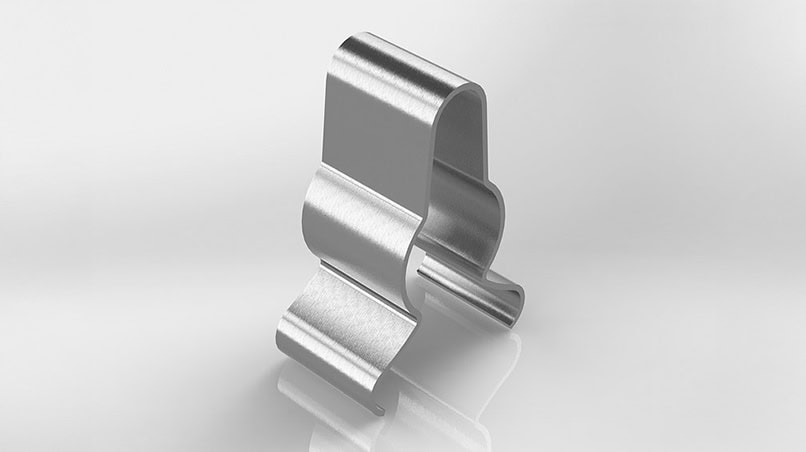
Metal springs: a lot of strength and elasticity from which we benefit, mostly unnoticed.
In various devices and machines, often completely hidden from view, spring elements hold, clamp, lock and control very specific applications. And how are these metal springs manufactured?
How are metal springs manufactured?
Metalworking and processing
PUNCHING AND FORMING TECHNOLOGY FOR METAL SPRINGS
One method that is frequently used in the production of metal springs is punching. This involves cutting a piece of metal into shape on a punching machine. Large metal plates are inserted into modern production systems and cut or punched into stamped parts using a cutting tool. In addition to punching, other forming processes are used in which the metal springs are bent into the desired shape.
For series production, punching technology and bending technology can be combined on CNC-controlled high-performance machines to create an automated work process, the punching and bending technology.
THE POST-TREATMENT OF METAL SPRINGS
A subsequent surface treatment of the metal springs provides a range of additional desired properties. In many applications, the springs need to be harder and/or more resistant to rust or heat, or a visual finish is desired.
MANUAL WORK IN SPRING PRODUCTION
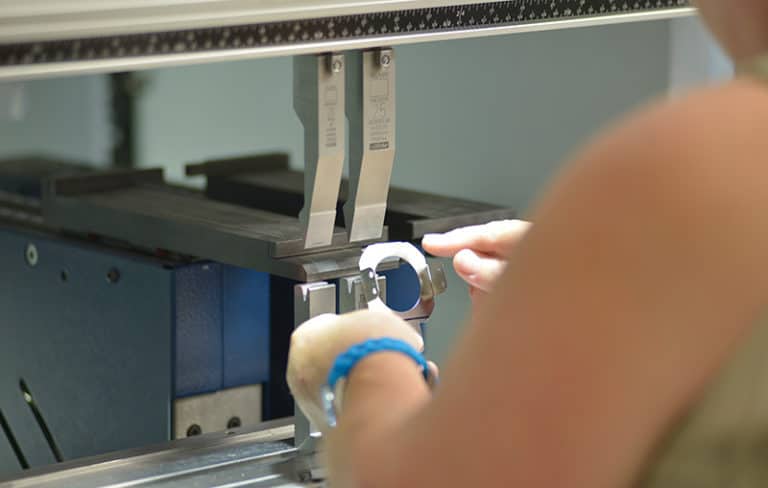
It may also be necessary to carry out individual production steps manually when manufacturing metal springs. This is particularly the case when special designs, complicated components or complex assemblies are required. In these cases, the stamping and bending work is carried out manually.
What materials are used for metal springs?
Metal springs are often made of steel. Spring steel and spring steel strip have good workability, high hardness and a good strength/elasticity ratio. Each steel has its own individual properties, so the choice of the right material depends on the requirements of the end product in question.
MATERIAL TYPES FOR METAL SPRINGS
1.1248 spring steel (C75S+QT hardened)
1.1248 spring steel is a carbon steel that provides high strength and wear resistance. The material 1.1248 is not corrosion-resistant, so it cannot be used in corrosive or extreme media without additional surface treatment.
1.4310 stainless steel (X10CrNi188)
1.4310 spring steel is an austenitic chromium-nickel steel. This material is characterised by good formability, weldability and corrosion resistance. 1.4310 is ideal for the production of corrosion-resistant and high-strength components and is used, for example, as Springs in mechanical engineering Application.
1.4301 stainless steel (X5CrNi1810)
1.4301 spring steel is a relatively soft, non-ferromagnetic austenitic steel. Thanks to its low carbon content, this material is corrosion-resistant even without heat treatment. X5CrNi18-10 offers good processing properties and an attractive appearance.
1.4401 stainless steel (X5CrNiMo171-12-2)
1.4401 is a molybdenum-containing Austenitic steel for spring technology. Its corrosion resistance is higher than that of 1.4301. The steel is non-magnetic and offers good relaxation.
1.4568 stainless steel (X7CrNiAI17-7)
1.4568 is a precipitation-hardenable (heat treatment to increase the strength of alloys) stainless steel with excellent long-term properties, good corrosion resistance and low relaxation.
CW101C Copper beryllium spring steel (CuBe2)
CW101C is a steel with good thermal conductivity and particularly high hardness, corrosion-resistant, anti-magnetic and non-sparking.
2.4669 Inconel (NiCr15Fe7TiAI)
2.4669 Inconel is a nickel-based spring steel. This steel is highly resistant to corrosion and oxidation and also has a high heat resistance. Metal springs made from this steel can therefore be used in extreme conditions.
2.4632 Nimonic 90 (NiCr20CO18Ti)
The material 2.4632 Nimonic 90 is a nickel-chromium-cobalt alloy and is characterised by a high creep rupture strength even at temperatures of up to approx. 920°C. This steel is used for springs that are exposed to high temperatures and high mechanical stress.
Spring steel compared to other steels
What types of metal spring are there?
Where are metal springs used?
Springs made of metal are used in machines and systems, but also in appliances and devices of all sizes. Machine parts are made movable and functional with these "hidden" helpers, switching contacts can be closed or opened, connections made or energy stored - which is why metal springs are used in various industries:
- Electronics industry
- Electrical engineering industry
- Medical industry
- Aerospace industry
- Mechanical engineering industry
- Furniture industry
- Automotive
- Sporting goods industry
- Household appliance industry